April 2026
A sickle cell cure for African babies, TippingPoint Biosciences, SpaceX Bio?
Lexi Ventures is a VC firm with a unique focus on genetic engineering at seed stage.
SpaceX Bio?
Last week SpaceX took an option to buy Cursor for $60 billion. SpaceX merged with xAI in February. The combined entity runs the Colossus cluster, with roughly one million H100-equivalent GPUs. Cursor has crossed $2 billion in annualized revenue selling AI inference to software engineers. The deal converts abundant compute capacity into software revenue.
Coding is the obvious first vertical in which to make those GPUs earn revenue. Every output token maps to billable engineering work. The next vertical with comparable revenue density per token is biotech. A novel drug target found through computation can be worth hundreds of millions in licensing value. A clinical decision support inference can move reimbursement on a single patient by tens of thousands of dollars.

So here is a bold prediction. SpaceX will eventually run the same playbook on a biotech company. Four candidates come to mind.
Schrödinger sells physics-based molecular simulation software to nearly every top-twenty pharma. Every license is gated by the GPU hours SpaceX could supply for practically free.
Tempus AI has built the largest multimodal oncology dataset in the United States. Its pharma analytics revenue scales directly with model quality and inference throughput.
Illumina sits at the top of the genomics workflow. A compute-funded AI interpretation layer would let every sequencing run produce a paid downstream output.
Ginkgo Bioworks has spent over a billion dollars on lab automation that generates proprietary biological training data. Colossus-scale compute would let it serve biology foundation models at a level no competitor could match.
The Cursor deal is a signal. Compute-rich owners will keep hunting for product-market fit in adjacent verticals. Biotech is the next obvious step.
Lexi Ventures does not hold positions in any company mentioned above, and this thought experiment is not investment advice.
TippingPoint Biosciences
Congratulations to TippingPoint Biosciences (a Lexi Ventures portfolio company) on closing an oversubscribed $4.5 million seed round, led by SOSV and LKS Fund with participation from Sazze Partners, Freeflow Ventures, StoryHouse Ventures, Sontag Innovation Fund, American Cancer Society BrightEdge, XEIA, and WeCAN.

Co-founded by Laura Hsieh and UCSF chromatin biologist Geeta Narlikar, the company screens potential medicines against the molecular switches that control which genes are active inside a cell, a set of targets that has long been out of reach for conventional drugs, opening up new possibilities for rare diseases. Their lead program is aimed at Diffuse Intrinsic Pontine Glioma (DIPG), a pediatric brainstem cancer that is currently untreatable and almost always fatal within months of diagnosis.
We are rooting for the team and the families who are waiting for a real option.
A sickle cell cure for African babies
American biotech investors love sickle cell as a rare disease story, but few of them appreciate what the disease actually does to the communities and children who have it. Roughly 515,000 babies are born with it each year. In sub-Saharan Africa up to 80% die before the age of five. That is, every year, a number of mothers losing their child roughly equal to every mother in Washington D.C. and roughly 20 times as many babies as died of COVID. They suffer pain crises, lung failure, organ damage, and a spleen that gives out.
The two approved gene therapy cures, Casgevy and Lyfgenia, run $2 to $3 million per patient and require hospital infrastructure that does not exist in the countries where 80% of patients are born.
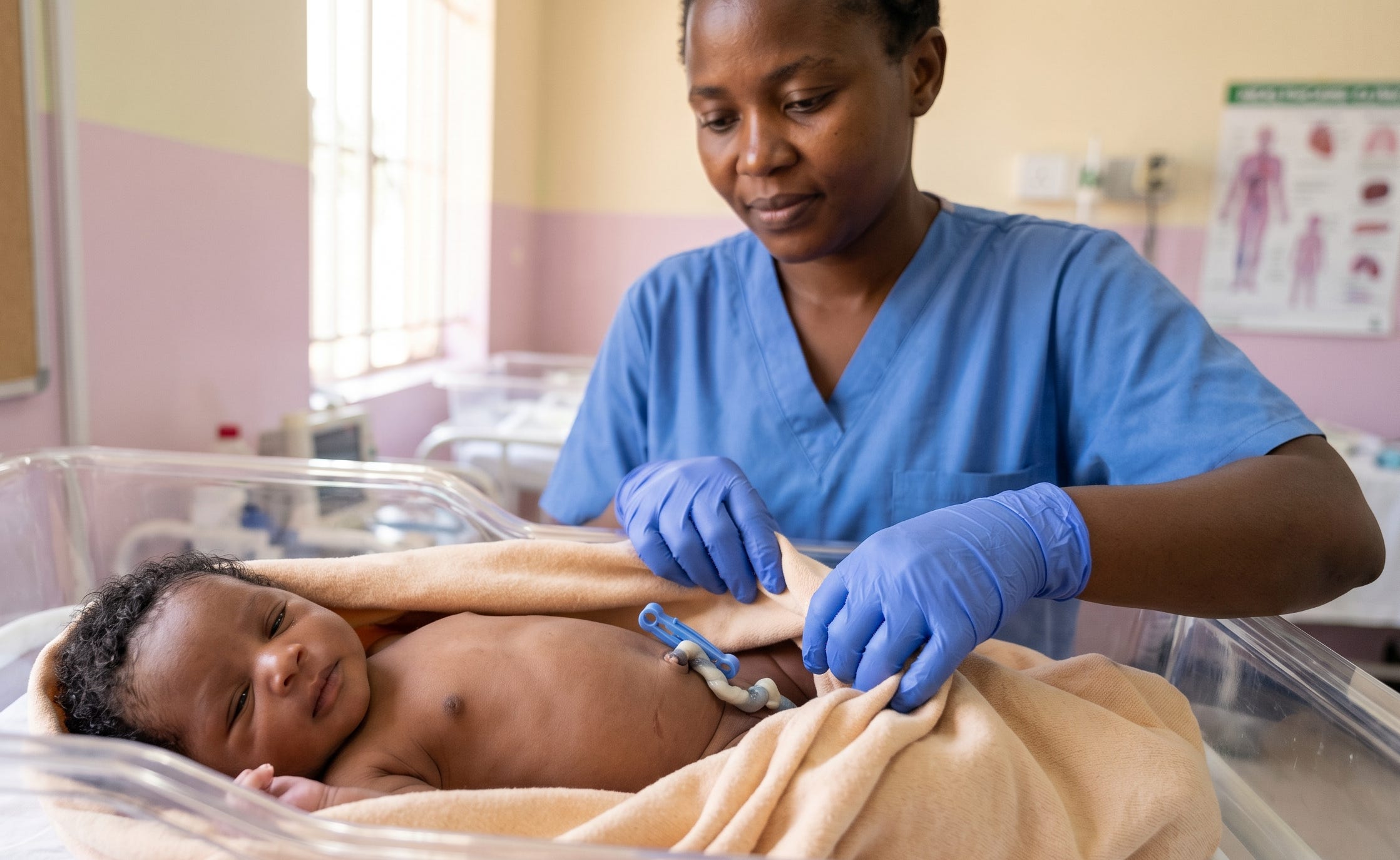
An effort called Operation SAHARA, led by Dick Nchang, aims to deliver a cure to African newborns at roughly one one-hundredth of the U.S. price, which sounds impossible until you look at how they get there. SAHARA collects stem cells from the baby’s own umbilical cord at birth (no expensive collection drugs, no hospital procedure), processes them in a simplified workflow that replaces a $20,000 instrument run with about $100 of supplies, and adds a natural genetic variant that lets the corrected cells outcompete the sickled ones, potentially reducing the harsh chemotherapy that today’s cures require.
None of this is proven in patients yet. The transplant step is still pending, but the cost math is built on real engineering choices rather than wishful thinking. If it works, what gets funded in Boston might also be possible in Lagos, where the need is massive.
If you can help, reach out to Dick directly or let me know if I should make an intro.
Connect
Thank you for your interest and support.