Lexi Ventures is a VC firm with a unique focus on genetic engineering at seed stage.
💼 At Lexi
Many small venture firms run on memory and a CRM. Over the last three months we replaced ours with three systems, fully live this month.
The first reads patents. It estimates which of a company’s claims will survive, which will be narrowed, and whose patents could block them, then carries that risk into the valuation. A seed-stage genetic engineering company is often worth about what its patents are worth, and that question normally goes to outside lawyers for weeks. We now get a first answer the same day.
The second matches companies to investors. It turns a fundraise into a ranked list of the investors most likely to be interested. We run it at no charge for any genetic engineering startup that asks.
The third is the database underneath both. It currently holds 9,700 people and companies, 1,900 funding rounds, 9,700 recorded interactions, and 962 VC firm profiles covering 7,680 of their past investments. A maintenance agent crawls constantly for corrections and enrichment.
None of these systems decides anything. A person approves every investment memo. We build our own firm the way we ask founders to build theirs.
🦠 The FDA Approved a Virus
On August 6 the FDA approved a new medicine for skin cancer. Tudriqev is an engineered living herpes virus that infects and multiplies inside tumors. It attracts the immune system and causes cancer cells to fuse together and burst. In patients whose cancer had already stopped responding to standard treatment, tumors shrank in about one in four, and the benefit typically lasted about 14 months.

The company reached this on its third attempt. The FDA rejected the application in July 2025 and again in April 2026, and approved it this month only after an outside panel of experts voted 10 to 3 in favor. The approval depends on a larger trial now running.
A deliberately engineered virus is now an approved American cancer medicine, not a laboratory idea. Our portfolio company Kopra Bio works in the same direction, with an engineered virus that makes brain tumor cells produce a signal that draws in the immune cells that kill them.
The FDA’s two rejections of Replimune did not make the medicine wrong. They made it late.
🎛️ Turning a Gene Down Instead of Rewriting It
The most interesting gene editing company of the month does not edit genes. On August 11, Epicrispr Biotechnologies raised $90M to move its lead treatment toward final trials.
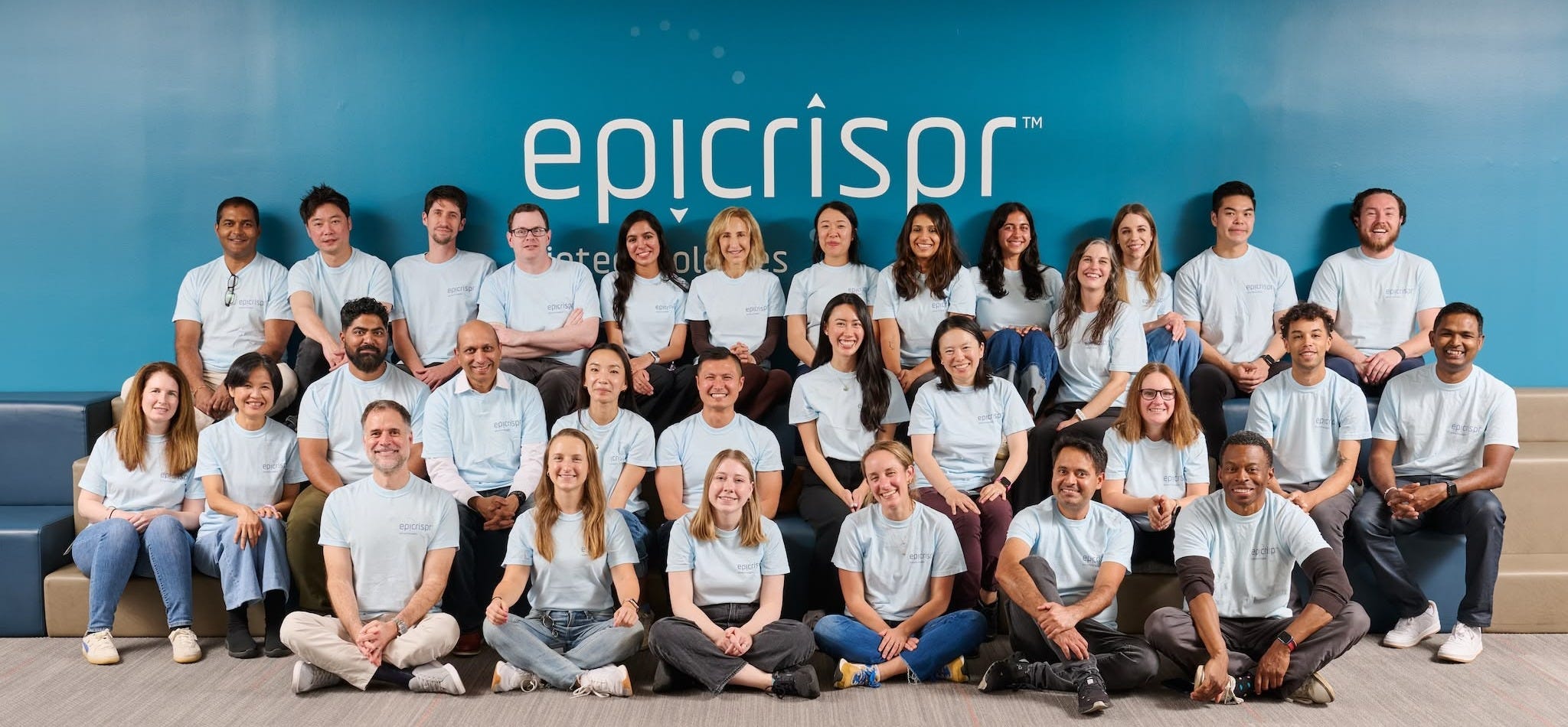
Most gene editing changes the letters of a gene. Epicrispr instead changes the chemical tags attached to the DNA, which tell a cell which genes to use. Epicrispr’s treatment finds one gene, DUX4, and switches it off. DUX4 is supposed to stay silent in adult muscle. In one inherited form of muscular dystrophy it switches back on and destroys muscle cells. The gene is spelled correctly. It is only set to the wrong level.
In June the company reported that all three patients who reached six months after a single infusion had gained muscle. In a disease where muscle only ever disappears, that is the first evidence in the other direction. Nine patients had been treated by May with no serious side effects. Further results are due in September.
The wider point is that this is not one drug. Any disease caused by a gene running at the wrong level, rather than a gene spelled wrong, is a candidate. Not every genetic disease is a spelling error. Some are a gene playing at the wrong volume.
🤖 36,000 Experiments That No Person Ran
In February an AI ran 36,000 biology experiments. No person designed any of them. OpenAI and Ginkgo Bioworks reported that the model proposed each round itself, and robots in an automated laboratory carried them out and returned the results for the next round. At NVIDIA’s developer conference this year, Novo Nordisk and two smaller companies reported that proteins designed by AI models worked when tested at the bench.
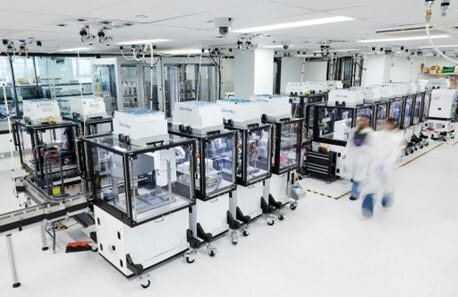
This matters at seed stage for one reason. A biotech company has always been a bet on a few expensive experiments. Each round took months, so founders had to be right early, because they could not afford to be wrong often. When the design-and-test cycle drops from months to days, a young company gets more attempts for the same money, and it learns that an idea has failed before the Series A rather than after it.
That changes what a seed investment buys. When experiments get cheap, judgment is the only scarcity.
🌱 Genetic Engineering Is Not Only Medicine
Here is a pesticide that is alive, that harms one species instead of everything in the field, and that you manufacture by growing it. Robigo engineers soil microbes to switch off the genes a crop disease needs in order to spread.

Our own Taxa Technologies does the same thing on human skin, replacing the bacteria that produce body odor with strains that do not. Outside of medicine the regulatory burden is far smaller, and a product reaches a customer in about a year instead of a decade.
Most investors treat genetic engineering as a kind of medicine. Medicine is the most valuable early market for these tools. It is not the largest one.
📈 Where the Exits Are
Large drug companies spent more than $120B buying smaller ones in the first half of this year, across more than thirty deals of a billion dollars or more. What they bought matters to us more than the total. In the twelve months through February, five companies working on treatments that engineer cells inside the patient’s body were bought for over $7.3B combined. Lilly paid $2.4B for Orna, AbbVie $2.1B for Capstan, and Bristol Myers Squibb $1.5B for Orbital. All three were seed-stage ideas less than a decade ago, and Orbital was founded in 2022.
Time is the exponent in the denominator of venture returns. The FDA now runs a pilot that cuts a review from ten or twelve months down to one or two. It has also proposed letting a company that makes custom genetic treatments reuse its evidence from one patient’s disease for the next, instead of starting again each time. For a company spending $500,000 a month, a review process shortened by 10 months is one financing round removed.
Connect
Thank you for your interest and support.